Brake noise gets most of the attention because it is hard to miss. A squeal at a stoplight or grinding near one wheel will make almost any driver think about brake repair. But worn brakes do not always announce themselves with sound first.
Sometimes the warning is quieter than that. The pedal feels different. The vehicle takes longer to stop. The steering wheel shakes. One wheel smells hot after a drive. If you only wait for noise, you can miss other brake symptoms that show up earlier.
Brake Pedal Feel Can Change First
Your brake pedal should feel familiar. It should not sink closer to the floor, feel spongy, pulse under your foot, or require more pressure than usual. A small change in pedal feel can point toward worn pads, old brake fluid, air in the brake lines, a leak, or a hydraulic problem.
A soft pedal is especially important to check. Brakes rely on pressure, and the pedal is how you feel that pressure. If the pedal feels lower than normal or slowly sinks while you are holding it at a stop, the brake system needs an inspection before more driving turns risky.
Longer Stopping Distance Is A Brake Warning
A car that takes longer to stop is giving you a serious clue, even if the brakes stay quiet. Thin brake pads, worn rotors, old fluid, dragging calipers, or poor tire grip can all affect stopping distance. The change can build slowly enough that you adjust without realizing it.
You may notice it most in traffic, on wet roads, or when coming down a hill. Maybe you start braking sooner than you used to. Maybe the car just does not slow as confidently. That is not something to shrug off. Brakes should feel predictable every time you use them.
Steering Wheel Shake During Braking
A shaking steering wheel while braking is one of the most common signs that the brake rotors need attention. Rotors can become uneven from heat, wear, rust, or pad material transfer. When the pads press against an uneven surface, the vibration can travel through the pedal, the steering wheel, or the car's body.
Tires, suspension parts, and wheel bearings can also cause vibration, so the brakes should not be blamed without testing. The timing helps narrow it down. If the shake happens mostly when you press the brake pedal, the brake system should be checked along with the front-end components.
Pulling To One Side When Stopping
If your car pulls left or right during braking, one side may be doing more work than the other. That can happen when a caliper sticks, a brake hose restricts fluid flow, pads wear unevenly, or the brake hardware does not move freely.
Pulling can also come from tires, alignment, or suspension wear. Still, when it happens during braking, the brakes need to be part of the check. Uneven braking can wear parts faster and make the vehicle feel less stable when you need to stop quickly.
Burning Smells Or Hot Wheels
A hot, sharp smell after driving can point toward dragging brakes. Sometimes it smells like burning friction material. Sometimes you may notice one wheel feels much hotter than the others, or there is heavy brake dust on one side.
That can happen when a caliper does not release fully, slide pins stick, the parking brake drags, or a brake hose holds pressure in the caliper. Heat is hard on pads, rotors, seals, and bearings. If the smell keeps returning, it is better to check it sooner rather than wait for smoke or grinding.
Brake Warning Signs Besides Noise
Brake symptoms can appear in several ways before the system becomes loud. Watch for changes like these:
- The brake pedal feels soft, low, or spongy
- The car takes longer to stop
- The steering wheel shakes when braking
- Vehicle pulls to one side during stops
- Burning smell near a wheel
- Brake warning light turns on
- One wheel has much more brake dust
- The brake pedal pulses under your foot
Any of these signs can point to worn pads, rotor trouble, fluid issues, caliper problems, or another brake issue. Regular maintenance helps catch those problems before one worn part damages another.
Why A Complete Brake Check Is Better Than Waiting
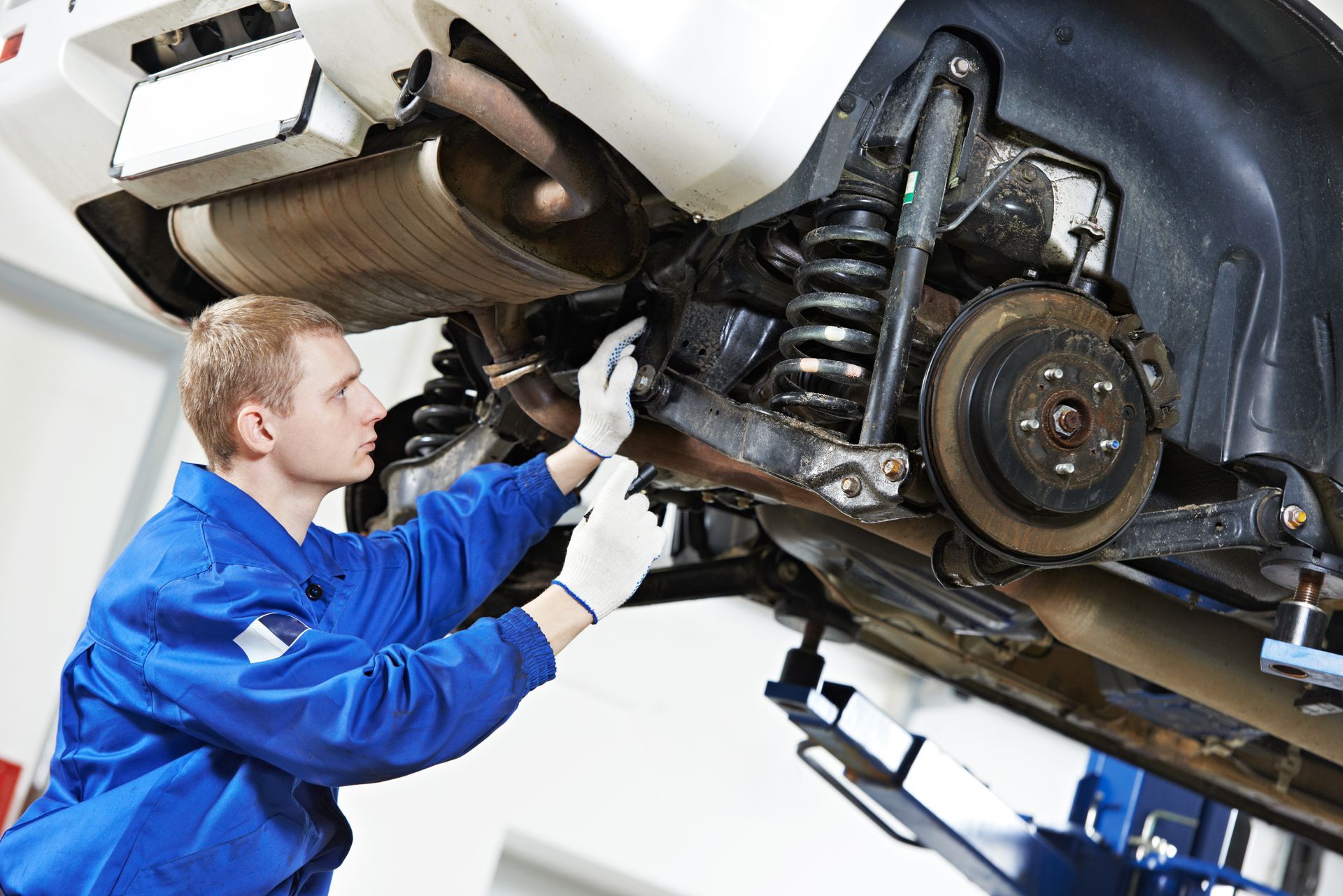
Brake repair should not be based on sound alone. A complete brake check measures pad thickness, checks rotor condition, looks for leaks, reviews fluid condition, and ensures calipers, hoses, and hardware are working as they should.
That full look is important because one brake problem can hide behind another. A sticking caliper can ruin new pads. Old brake fluid can make the pedal feel wrong. Worn rotors can make new pads noisy. A careful check helps match the repair to the real problem, not just the loudest symptom.
Get Brake Repair In New York, With Proper Service of Baldwin Place
If your brakes feel different, take longer to stop, shake, pull, smell hot, or make noise, Proper Service of Baldwin Place can help drivers in Baldwin Place, NY, and Croton Falls, NY, find the cause.